Drainage Tile Installation in Fort Wayne, IN
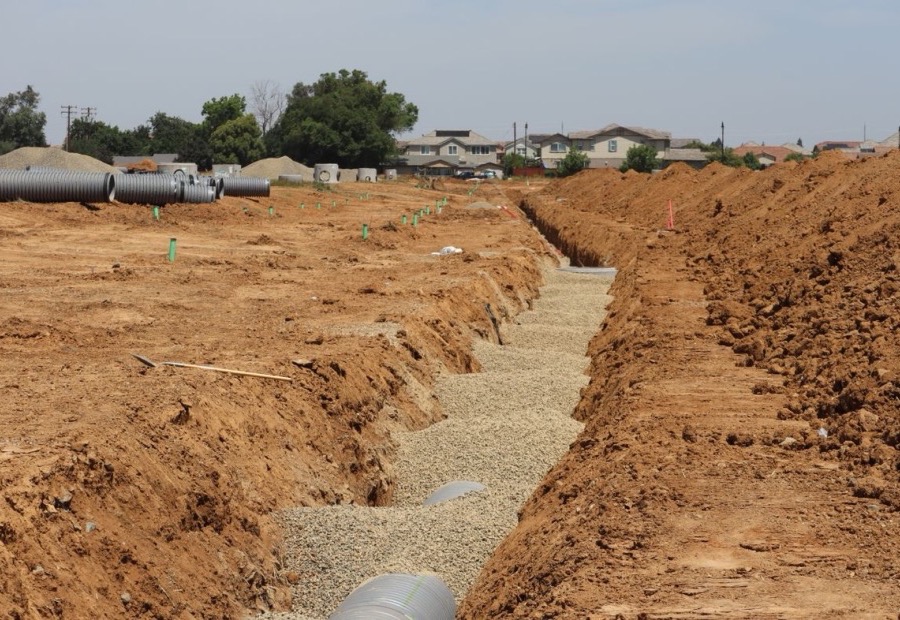
Fort Wayne Drainage Pros installs and repairs exterior drain tile and footing drains for homes across Fort Wayne and Allen County, Indiana. We are a licensed and insured drainage contractor, and we handle foundation water from the outside. A footing drain is a perforated pipe run around the outside of the footing to catch water in the soil and carry it off before it reaches the wall. Builders call the pipe drain tile, and the name stuck from the clay tiles once used for the job.
The pipe rides in washed #57 stone and geotextile filter fabric, sloped to daylight or a sump. That is different from an interior basement system, where a company breaks the floor inside and sets a perimeter channel to catch water that has already reached the wall. Outside, the water is stopped in the ground; inside, it is collected after it has arrived.
Signs You Need Drainage Tile Installation
Water tells you where it is. These are the patterns that point to a footing drain problem in Fort Wayne homes:
- Water seeping through the wall-floor joint during or after rain. That joint is where the footing meets the wall, and it is exactly where a footing drain should be catching the water.
- A damp or wet strip along the base of the basement wall, with no crack above it. The water is rising from below, not running down.
- White mineral deposits (efflorescence) on the lower wall. Moisture is moving through the concrete steadily enough to leave its salts behind.
- A sump pump that runs constantly, even between storms. The pit is filling from groundwater that has no other exit.
- Standing water in a crawl space after rain. The soil under the house holds water because nothing carries it away.
Not every wet basement needs drain tile. Roof water from a downspout dumping at the wall is the most common cause in Fort Wayne, and burying the downspouts fixes it for a fraction of the cost. Settled grade that tips back at the house is the second, and regrading handles that. We check both before recommending a footing drain, because the cheaper fix may be the right one.
How Drainage Tile Installation Works
We excavate along the wall down to the footing, then lay perforated pipe on a bed of washed stone at the base. The pipe and stone get wrapped in non-woven fabric so the clay cannot pack them, and the trench is backfilled with free-draining material. The whole run falls toward its exit, because a footing drain with no slope holds water at the wall instead of moving it off.
The dig is the job. On a one-story house the footing sits about four feet down. On a full basement the cut can run seven or eight feet, and the trench has to be wide enough for a person to work in safely. A mini excavator opens the ground where it can reach. Tight spots beside a driveway, a deck, or a fence line go by hand. Each stretch of wall gets a clean line of pipe, stone, and fabric before the backfill goes in.
We set cleanout risers at the corners so the line can be flushed or camera-inspected later without digging it up again. On long runs a cleanout every 50 to 75 feet keeps the whole system serviceable.
Foundation Water, Handled Outside
Water in the soil against a foundation presses on the wall and works through any crack or pore it can find. A footing drain relieves that pressure by giving the water a lower, easier path than the wall. Set at the base of the foundation, it collects the water down where it gathers and carries it away, so it never builds up against the concrete.
Fort Wayne sits on glacial clay till, and clay holds water instead of draining it. After a storm, the soil against the wall fills up and presses harder. Three rivers meet in the city, and homes near the Maumee, the St. Marys, and the St. Joseph face a water table that rises with the rivers. A footing drain is the line of defense between that water and the basement.
Exterior Drain Tile vs Interior Basement Systems
Interior perimeter systems that jackhammer the basement floor are their own line of business, sold by other companies. Our work is the exterior drain tile: the perimeter footing drain that keeps water out of the wall in the first place. We say plainly which one we do, so there is no confusion about what you are getting.
The difference matters. An interior system collects water after it has already passed through the wall. It manages the leak. An exterior footing drain stops the water in the ground before it reaches the wall at all. It removes the cause. Both have a place: an interior system works when exterior access is blocked by a porch, a driveway, or a neighbor's wall. Where the ground is open, exterior drain tile is the fix that keeps the water out instead of mopping it up inside.
Drain Tile Repair
Older Fort Wayne homes often have clay or concrete drain tile that was laid at construction and has been in the ground for 40, 50, or 70 years. Clay tile cracks, shifts, and separates at the joints. Tree roots find the gaps and fill the pipe. Soil washes in through broken joints and silts the line shut.
We repair drain tile by excavating the failed section, removing the broken pipe, and replacing it with new perforated PVC in washed stone and filter fabric. Where the original tile was set in dirt with no stone and no fabric, a spot repair does not last because the rest of the run is failing the same way. In that case we lay a new line for the full stretch.
A camera inspection through a cleanout or an open end tells us where the break is and how far the damage runs. That scopes the dig before we price it.
Where the Water Goes
A footing drain still needs an exit. On a sloped lot it runs to daylight. On flat ground it ties into a sump that pumps the water up and out, and from there a discharge line carries it away from the house. We often bury the downspouts at the same time, since keeping roof water off the wall means less for the footing drain to handle.
Near the rivers the exit takes more thought. A daylight outlet set low on a bank stands underwater when the river is high, and that backs the whole line up. We set those outlets higher and fit a check valve or a flap so nothing pushes back in.
Drainage Tile Installation Cost in Fort Wayne
An exterior footing drain in Fort Wayne runs about $4,000 to $12,000, and the digging is why. Reaching the footing means excavation along the wall, sometimes several feet down, with machine access and backfill.
| Scope | Typical Range | Notes |
|---|---|---|
| One wall (30-40 ft) | $4,000 - $6,000 | Open access, no obstructions |
| Two walls (corner wrap) | $5,500 - $8,000 | Common scope for a wet corner |
| Full perimeter | $8,000 - $12,000 | Excavation around the entire foundation |
| Drain tile repair (section) | $2,000 - $5,000 | Depends on depth and length of the failed run |
What moves the price: depth of the footing, length of the run, machine access (a tight lot with fences and decks costs more than an open yard), how much of the perimeter is wet, and whether the exit is gravity to daylight or a sump that needs a pump and a discharge line. One wet wall costs less than a full perimeter. Every job gets a free written estimate first, with the scope of the dig spelled out.
Keeping Drain Tile Working
A footing drain built with stone and fabric asks for very little maintenance. Keep the outlet clear. A daylight exit collects leaves and debris, and a plugged outlet backs up the whole line. Check it twice a year and after any hard storm.
Keep tree roots away. Willows, silver maples, and cottonwoods hunt water and will find a drain line through any gap in the pipe. If a large tree sits near the foundation, the drain line needs a root barrier or a wider setback.
If you have cleanouts, run water through them once a year to confirm the line flows freely. Slow drainage or standing water in a cleanout means a blockage forming downstream.
Water pushing through a foundation wall from outside? Call (260) 386-1098 for a free look and an honest read on whether the fix is drain tile installation, a repair of what is already in the ground, or something simpler like regrading and buried downspouts.
What is drain tile?
Drain tile is the perforated pipe run around the outside of a foundation footing to collect the water in the soil and carry it off. The name goes back to the clay tiles once used for the job. Today it is perforated pipe in washed stone, wrapped in filter fabric, sloped to daylight or a sump.
Is this the same as interior basement waterproofing?
No. Interior systems open the basement floor and install a channel around the inside edge to catch water that has already reached the wall. An exterior footing drain works outside, in the soil, to catch that water before it gets to the wall at all. We do the exterior work. The interior channel is a different trade.
Do I have to dig around my whole foundation?
For a full footing drain, the wall being treated has to be excavated down to the footing, so the drain can sit where the water is. That is why it is the biggest drainage job on a house. Where only one wall or corner is wet, the dig can be limited to that stretch. We scope it to where the water actually is.
Why is exterior drain tile expensive?
The digging is the job. Reaching the footing means excavating along the foundation, sometimes several feet down, then bedding the pipe in stone and fabric and backfilling. The materials are a small part of it. Machine access, depth, and how much of the perimeter is wet are what set the price.
How long does drain tile last?
Drain tile built with washed stone and filter fabric lasts for decades. The fabric keeps the clay fines out of the stone, so the pipe stays clear and the water keeps moving. Drain tile laid in dirt or unwashed gravel with no fabric packs with clay and fails in a few years. The materials and the method are what buy the life.
Can old drain tile be repaired instead of replaced?
Sometimes. If the pipe has collapsed or shifted off grade, the damaged section can be dug out and relaid. If the original tile was set with no fabric and the stone is packed with clay, a patch does not fix the problem because the rest of the run is failing too. We camera the line when we can reach it and tell you which situation you have.
How do I know if my house has drain tile?
Most Fort Wayne homes built after the 1950s have some form of footing drain. Older clay tile may still be in the ground but silted shut. If your basement stays dry in normal rain but leaks during heavy storms, there may be tile that is partially blocked. If water comes through the wall-floor joint steadily, the tile is either missing or failed. We can tell from the pattern.